Google Search

Loading
Showing posts with label Great Indian Bustard. Show all posts

Interesting facts about National and State animal icons in India

Short URL for the story: http://goo.gl/rDkul

What you find below is the answers to a quiz on National/State animals of India

Asian Elephant, Elephas maximus, National Heritage animal of India,
Asian Elephant (Elephas maximus) :
The National Heritage animal of India, 

  1.  Elephant. It was declared as the National heritage animal by MoEF on 21-10-2010.
  1. River Dolphin. Also known as Gangetic dolphin, it has got the title from MoEF on 10-05-2010.
  1.  Black Buck. Black Buck is the state animal for Andhra Pradesh, Haryana and Punjab.
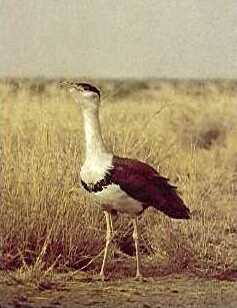
  1. Great Indian Bustard which is the state bird of Rajasthan. As of December 2012, it stays critically endangered
  1. You guessed it correct that some island would be the answer. Butterfly fish which is the state animal of Laksha Dweep islands is the only non-mammal among the state animals in India.
  1. Koel. Koel is the state bird for national capital region of Delhi and states of Jharkhand and Karnataka
  1. Great Indian Bustard again. Unfortunately, authorities felt that GIB doesn’t have the looks to be a national bird. Moreover, the cultural context also backed peacocks candidature for the coveted title, apart from its beauty. Interestingly, Salim Ali was prophetic in suggesting GIB. The bird which was once distributed from Southern states of Karnataka to northern plains found its population plummeting down due to encroachment of grasslands in the coming years. Now it is on the verge of extinction with a critically endangered status in IUCN Red data list.  If GIB was declared as the national bird instead of pea cock, that would have helped it to survive the test of time and human greed.
  1. Lion was India’s national animal till 1972. In 1973, tiger was re-notified as India’s national animal.
    blackbuck, Antilope cervicapra, state animal of Haryana, state animal of Andhra Pradesh, state animal of Punjab
    blackbuck (Antilope cervicapra).
  1. Daman and Diu
  1.  Mizoram and Manipur. Hume’s Bar Tailed pheasant which is also called Mrs. Hume’s Pheasant is the state bird for these two states.
  1. Again an island. Andaman and Nicobar has declared Sea Cow as their state animal. Though it is an aquatic animal, it is a mammal.
  1. Eight. Four Asiatic Lions standing back to back. It is interpreted that the four lions symbolize Power, Courage, Pride and Confidence. Apart from the four lions, the original emblem on the stupa depicts four more animals – one bull, one elephant, one bull and one horse as guardians of four directions. However, in the national emblem, as adopted by the government has three visible lions, one bull and one horse only.

STATE
ANIMAL
BIRD
Andhra Pradesh
Blackbuck (Antilope cervicapra)
Indian roller/blue Jay (Coracias benghalensis)
Arunachal Pradesh
Hoolock Gibbon (Bunopithecus hoolock hoolock)
Great Indian Hornbill
(Buceros bicornis)
Assam
Indian One Horned Rhinoceros
(Rhinoceros unicornis)
White winged wood duck (Asarcornis scutulata)
Bihar
Gaur (Bos frontalis / Bos gaurus)
Parakeet
Chhattisgarh
Wild Buffalo (Bubalus bubalis)
Hill myna (Gracula religiosa)
Goa
Gaur (Bos frontalis / Bos gaurus)
Ruby Throated Yellow bulbul
(Brachypus gularis / Pycnonotus gularis)
Gujarat
Asiatic Lion (Panthera leo persica)
Greater Flamingo (Phoenicopterus rubber)
Haryana
Black Buck (Antilope cervicapra)
Black Patridge/ Black Francolin
(Francolinus francolinus)
Himachal Pradesh
Snow Leopard (Uncia uncia/ Felis uncia)
Western Tragopan (Tragopan melanocephalus )
Jammu and Kashmir
Kashmir Stag (Cervus elaphus hanglu)
Black Necked Crane (Grus nigricollis)
Jharkhand
Indian Elephant  (Elephas maximus)
Koel  (Eudynamys scolopacea)
Karnataka
Spotted Deer (Axis axis)
Koel (Eudynamys scolopacea)
Kerala
Indian Elephant (Elephas maximus)
The Great Indian Hornbill (Buceros bicornis)
Madhya Pradesh
Swamp Deer  (Cervus duvaucelii)
Paradise fly catcher (Terpsiphone paradise)
Maharashtra
The giant Squirrel (Ratufa indica)
Great Imperial Pegion (Ducula aenea)
Manipur
Sangai (Cervus eldi eldi)
Hume’s Bar Tailed pheasant (Syrmaticus humiae)
Meghalaya
Clouded Leopard (Neofelis nebulosa)
Hill Myna (Gracula religiosa)
Mizoram
Serow (Naemorhedus sumatraensis)
Mrs. Hume’s Pheasant (Syrmaticus humiae)
Nagaland
Mithun (bos frontalis)
Blyth’s Tragopan (Tragopan blythii)
Odisha
Sambar (Cervus unicolor/ Rusa unicolor)
Indian roller ( blue Jay) (Coracias benghalensis)
Punjab
Blackbuck (Antilope cervicapra)
Eastern Goshwak (Astrus gentilis gentilis)
Rajasthan
Chinkara (Gazella bennettii)
Great Indian bustard (Ardeotis nigriceps)
Sikkim
Red panda (Ailurus fulgens)
Blood Pheasant (Ithaginis cruentus affinis)
Tamil Nadu
Nilgiri Tahr (Hemitragus hylocrius / Nilgiritragus hylocrius)
Emerald dove (Chalcophaps indica)
Tripura
Phayre’s Leaf Monkey (Trachypithecus phayrei)
Green Imperial Pegion  (Ducula aenea)
Uttarakhand
Himalayan Musk Deer (Moschus chrysogaster (?)   /Moschus leucogaster)
Himalayan Monal (Lophophorus impejanus)
Uttar Pradesh
Swamp Deer  (Cervus duvaucelii)
Sarus Crane (Grus antigone)
West Bengal
Fishing Cat (Prionailurus viverrinus)
White throated King fisher (Hlacyon smyrensis)
Andaman and Nicobar islands
Dungong (Sea Cow) (Dugong dugong / Trichehus dugong)
Andaman wood Pigeon (Carpophaga palumbodies / Columba palumbodies)
Chandigarh
Nil
nil
Dadra and Nagar Haveli
Striped Hyna (Hyaena hyaena)
Lesser Golden Backed Woodpecker (Dinopium benghalensis)
Daman and Diu
Yet to be declared
Yet to be declared
Laksha Dweep
Butterfly Fish
Sooty tern (Onychoprion fuscatus / Sterna fuscata nubilosa)
Delhi
Blue bull/ Neelgai (Boselaphus tragocamelus)
Shaheen ( Falcon) (Falco peregrinus peregrinator)
Puducherry
Indian Palm Squirrel (Funambulus palmarum)
Koel (Eudynamys scolopacea)

    Now don’t forget to post your reactions in the comment section below. 

Courtesy:
Venkataraman, K., Chattopadhyay, A. and De, J. K. 2012. National and State Animals of India: 1-173.( Published by the Director, Zool. Surv. India, Kolkata)

Great Indian Bustard, Four Toed Terrapin, White Bellied Heron and Gooty Tarantula among the 100 most threatened organisms in the world

Short URL to the story: http://goo.gl/1mwHv


According to the list of 100 most threatened organisms in the world prepared by more than 8,000 scientists from the IUCN Species Survival Commission and released at the ongoing World Conservation Congress at Jeju in South Korea, four organisms found in India belong to the category.


White bellied heron, Ardea insignis, most threatened bird in India
White bellied heron (Ardea insignis)
Image Courtesy: Mahesh Iyer (Wikimedia Commons)
Great Indian Bustard (Ardeotis nigriceps), White bellied heron (Ardea insignis), Common batagur or Four-toed terrapin (Batagur baska) and Gooty tarantula(Poecilotheria metallica) which are found in different parts of India are among the most threatened organisms in the world, says the report which is named “Priceless or Worthless?”. All of them are already listed as Critically Endangered in IUCN Red List

White Bellied Heron has only 70 to 400 individuals remaining in Bhutan, Myanmar and North East India, says the report. Accoridng to it, habitat destruction from hydroelectric projects has brought down the number of individuals. Captive breeding and release and avoiding adverse use of riverine habitat are suggested as urgent action required for saving the species.
Great Indian Bustard, Ardeotis nigriceps
Great Indian Bustard (Ardeotis nigriceps)
Image Courtesy:  LRBurdak (Wikimedia Commons)

Great Indian Bustard has only 50 to 249 mature individuals remaining. The bird which is found only India is threatened by “Habitat loss and modification due to agricultural development”, says the report. While establishment of protected areas and community reserves is suggested as the action required, the report interestingly suggest realignment of Indira Ghandi Nahar Canal project for saving the bird.

Distributed in Bangladesh, Cambodia, India, Indonesia and Malaysia, Common batagur or four toed terrapin is threatened by illegal export from Indonesia to China. India may be the best place to conserve the animal, if the illegal trade is cubed in the region, as suggested by the report. “Enforcement of CITES Appendix I restrictions and control of illegal trade” is listed as the urgent action required to save the species.

Common batagur, Four-toed terrapin, Batagur baska
Common batagur or Four-toed terrapin (Batagur baska) 
Gootyy Tarantula, reported so far only from Andhra Pradesh in India, is also threatened by habitat loss and illegal trade, as per the report.  The report suggests awareness programs and a curb on illegal trade as protection measures apart from habitat protection, community awareness.


Current Conservation status in India

Despite the heightened conservation significance as an endemic spider,  Gootty Tarantula is yet to be included in the schedule I of  Wild Life (Protection) Act of 1972, which is the major law to conserve rare organisms in India.   

Gooty Tarantula, Poecilotheria metallica, most threatened spider
Gooty Tarantula ( Poecilotheria metallica)
Image Courtesy: ZSI
The report has suggested the same among the urgent action required to protect Gootty Tarantula.

Four Toed Terrapin, Great Indian Bustard and White bellied Heron are already included in Schedule I of the act. Authorities have been mulling over announcing Critical Bustard Areas in India to the save the bird recently, as suggested by the report.

Apart from the four, Amsterdam albatross (Diomedea amsterdamensis) which is often found in the Indian Ocean is also listed among the 100 most threatened organisms in the world.

However, the report does not actually detail on the way or the criterion with which the 100 most threatened species were selected. There is wide spread criticism that many of the important species were left out in the list. 


India to declare Critical Bustard Areas to save Great Indian Bustard, Bengal Florican and Lesser Florican


Ministry of Environment and Forests, Government of India, has issued a set of guidelines to the states to set up Bustard Conservation Committees (BCCs) and to declare potential breeding areas of three grass land birds - Great Indian Bustard, Bengal Florican and Lesser Florican as Critical Bustard Areas to prevent human intervention in these areas.
Ardeotis nigriceps, Critical Bustard Areas, birds in India
Great Indian Bustard(Ardeotis nigriceps)
According to the guidelines, cattle grazing, construction activities and hunting will be completely banned in these areas during the breeding season of the birds. A 5 kilometre radius of the area will be declared as minimal infrastructure zone preventing constructions here to avoid bird mortality, says an official MoEF document.
The Critical Bustard Areas will be decided by the BCCs based on the field surveys conducted by forest officials to identify potential breeding, nesting and feeding sites of these birds.
The population of these birds have fallen alarmingly in India in the last decade which left just 300 or less Great Indian Bustards remaining, which happens to be the only breeding population of the bird in the whole world. Bengal Florican, a sub species is facing a same fate with just 350 members remaining in India. Lesser Florican is estimated to have a 2500 individuals remaining but is considered under Critically Endangered by IUCN.
The BCCs should chalk out state level action plans which extend from 5 to 10 years to make site-specific action conservation efforts to establish a viable breeding population of these birds to remove from critically endangered tag on the species.
Running Ex-situ breeding programme and efforts like making Bustard Gene banks and similar attempts are also suggested. It also directs the states to clear invasive species of plants since they obstruct visibility during breeding season. It also urges state forest departments to take over revenue land which are breeding sites.

Local community participation in Bustard Conservation                                                                  

The central guidelines also stress on the importance of local community participation in conservation. BCCs should have members from the local panchyats and the field studies will also record the major livelihood means of nearby villages of the Critical Bustard Areas, says the MoEF guidelines.
Distribution of Great Indian Bustard in India
Habitat Distribution of Great Indian Bustard in India
It also urges the state governments to make a compensatory mechanism, public consultations, awareness campaigns and help people to find alternate sources of livelihood to stop hunting and stealing Bustard eggs.
Fencing of the critically Bustard Areas and daily monitoring of such areas with local community participation is also suggested.