Google Search

Loading
Showing posts with label Kerala. Show all posts

Illegal traders of tiger body parts thrive along Indian border with Nepal and Bangladesh

tiger, tiger body part trade, wildlife trade, tiger trade hotspots
A tiger under captivity in a zoo in Mangalore, Karnataka


India’s borders with Nepal and Bangladesh have turned out to be the most active hot spots of illegal trade of tiger body parts, claims a new study report. Apart from the border areas, the report indicates that the Kerala-Tamil Nadu regions in South India as well as Madhya Pradesh in Central India are other potential hotspots of this illegal trade in the country.

Butterflies of India – Commander (Moduza procris)


Commander is one of the most beautiful butterflies in India. You may spot this vividly coloured butterfly right from Southern Western Ghats to North Eastern regions. The brilliant reddish brown on its upper side will attract your attention easily.

Usually seen along forest roads, water courses, open places and even close to villages, especially if its larval host plant Mussaenda is available around. If you are planning to take a close look at a Commander, its usual posture of wings pressed flat helps you get a good look. However, if you go close, it will take short flights and keep the distance.

This is part of the Butterflies of India series in Indian Biodiversity Talk's YouTube Channel.


Malabar Wildlife Sanctuary adds five new records to its avian fauna

Oriental Dwarf Kingfisher, Ceyx erithaca, Malabar Wildlife Sanctuary
An Oriental Dwarf Kingfisher (Ceyx erithaca) spotted at Malabar Wildlife Sanctuary during the annual population survey
(Image Credit: Malabar Natural History Society)
  
      The annual population survey of butterflies and birds at Malabar Wildlife Sanctuary in Kerala has added five more species of birds and eight new species of butterflies to the documented biodiversity of the sanctuary. The survey which was jointly carried out by Kerala Forests & Wildlife Department and Malabar Natural History Society during the second week of February was able to record 123 different species of birds at this small sanctuary situated in the Kozhikode district of Kerala.

Tiger Population in India shows 30.5 percent increase in 2014


A tiger under captivity in a zoo in Mangalore, Karnataka.


As per the latest estimates released by the Ministry of Environment and Forests, the number of tigers found in the wild, in India increased from 1706 in 2010 to 2226 in 2014. The new figures shows that there is a 30.5 percent increase in the tiger population compared to the last estimate. The results of the survey show that states like Karnataka, Uttarakhand, Madhya Pradesh, Tamil Nadu, and Kerala marked an increase in the tiger population.

According to the press release issued by Press Information Bureau, the figures were released by Prakash Javadekar, Minister of Environment, Forests and Climate Change in the inaugural address at the two day meeting of the Chief Wildlife Wardens of Tiger States and Field Directors of Tiger Reserves. According to the minister conservation efforts related to Special Tiger Protection Force, Special Programme for Orphan Tiger cubs, efforts to control poaching and initiatives to minimize Human-Animal conflict and encroachment have resulted in the growth of tiger population in the country. 

The figures are derived from a comprehensive survey of 18 Tiger States, covering an area of 3,78,118 sq.kms of Forest Area. The double sampling procedure used in the survey, using camera traps made a total of 1540 unique Tiger Photo captures. 

“The third round of independent Management Effectiveness Evaluation of Tiger Reserves has shown an overall improvement in the score of 43 Tiger Reserves from 65% in 2010-11 to 69 in 2014”, says the release. Moreover, the forest cover assessment also indicates improvement. “The assessment of Forest Cover Change in Tiger Landscape of Shivalik-Gangetic Plain has indicated an improvement of forest cover in core areas of Tiger Reserves”, says the release.

Indian damsel flies - Sapphire eyed Spreadwing (Lestes praemorsus) mating video


Sapphire eyed Spreadwing (Lestes praemorsus) is a beautiful damsel fly found in India and other Asian countries. Watch the damsel flies mating on the tip of an ornamental plant. Recorded from Kannur, Kerala

Hunting threatens endemic turtles in Kerala

Travancore tortoise, Indotestudo travancorica, reptile hunting, turtle hunting, hunting in western ghats
Travancore tortoise (Indotestudo travancorica)
(Photo Credit: Arun Kanagavel)

 Cochin forest cane turtle (Vijayachelys silvatica) and Travancore tortoise (Indotestudo travancorica)- two endemic reptiles found only in Southern Western Ghats- are hunted by locals and indigenous people including contract workers of Kerala Forest Department in Vazhachal and Chalakkudy forest divisions in Kerala , claims a new study published in the Asian Journal of Conservation Biology.

The researchers have met with tribal and non-tribal communities in the locality who claimed to have collected sack full of Travancore tortoises while clearing fire lines as contract labourers for the Forest Department  in these forest areas.

“These Chelonians (a taxonomic order which includes reptiles like turtles and tortoises) were usually collected while “cutting” fire-lines during the annual fire-management initiatives undertaken by the Forest Department and during the collection of non-timber forest produce (NTFPs). Respondents stated that they filled ‘sack loads’ of chelonians especially while clearing bamboo stretches”, says the study.

Beddome's Cat Snake (Boiga beddomei) video from Western Ghats, Kerala, India


Well, it is a cat snake and looks like a Beddome's Cat Snake (Boiga beddomei). But not very sure. If anybody can help in exact identification, that will be great help.

It came right into the house during a rainy night, but later decided to go back to a nearby plant to take rest.

As per International Union for Conservation of Nature (IUCN), Beddome's Cat Snake (Boiga beddomei) is considered data deficient. Though its actual geographic distribution is unclear, there are numerous reports of species from Sri Lanka and different parts of Western Ghats, in India.

The snake in the video was recorded from Southern Western Ghats of Kerala ( Kannur district, Kerala, India.)


Fish fauna in Bharathapuzha under severe threats, warn scientists

Bharathapuzha, River Nila, Threats to River Nila, Threats to Western Ghats Rivers
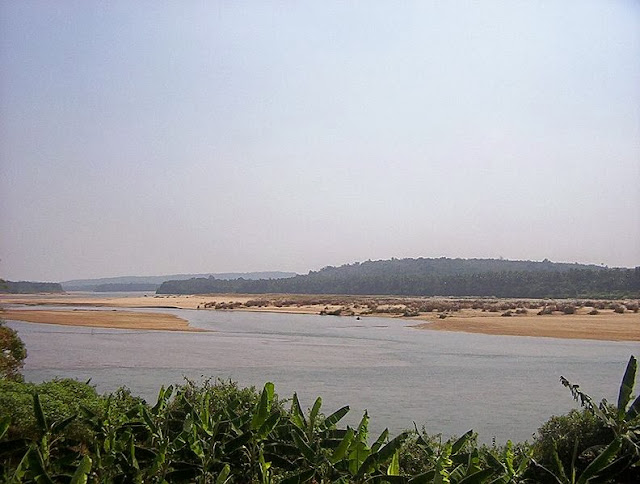
A view of Bharathapuzha (Image Credit: Wiki Media Commons/ Jjvellara)

Implement urgent conservation efforts or the rich and endemic fish wealth in the largest river in the Western Ghats of Kerala will remain only on papers, warns a new assessment on the threats to the fish diversity in the Bharathapuzha River, locally known as River Nila.

Through a survey on all the four major tributaries of the Bharathapuzha River system - Gayathripuzha, Chitturpuzha, Kalpathipuzha and Thoothapuzha – the study recorded 117 species of fishes in Nila with the highest species richness from the stretch between Parali to Purathur estuary. Among this, 33 are found only in Western Ghats and three are found only in Bharathapuzha River system. 

A group of researchers including A Bijukumar, Department of Aquatic Biology and Fisheries, University of Kerala, Siby Philip from Department of Zoology, Nirmalagiri College, Koothuparamba, Anvar Ali and Rajeev Raghavan from Conservation Research Group, St Albert’s College, Kochi and S Sushama from Department of Zoology, NSS College Ottapalam carried out the study which is published in the Journal of Threatened Taxa.

Top Ten Threats to River Nila

Despite the richness, the river system of River Nila is under threat from human interference, says the study which is published in the Journal of Threatened Taxa. “Several anthropogenic stressors including deforestation and loss of riparian cover, dams and other impoundments, pollution, sand mining, non-native species, climate change and destructive fishing practices are threatening the fish diversity of Bharathapuzha River system”, it says.

Threat #1: Sand mining

Most notorious, most widely known but most rampant, despite being regulated (encouraged ?) by the il-legal machinery. If we number the threat based on the calamity it brings, this one goes to top. The study marks the region between Pattambi and Thiunavaya as the superhot stretch of legal and illegal sand mining. Studies conducted by CESS in 1997 itself has shown that the rate of sand mining is way too above the rate of sand generation in Nila. For many fishes in Nila, Sand is the breeding substrate, and is the single crucial link that supports the aquatic food web. With the indiscriminate sand mining, it is just a matter of time for fishes like Glossogobius giuris and Sicyopterus griseus to vanish from Nila forever, warns the study.

Threat #2: Dams and impoundments

Known fact: Big dams are a major threat to the rich and endemic fish diversity of Nila, since they change the turbulence of the river causing high sedimentation and other problems. Lesser Known fact: Dozens of smaller check damk dams across Nila are also doing the same. Bigger dams are fixed in number so far – Nila has 11 irrigation dams. Impoundments are still proliferating, turning out to be a lesser noticed diversity killer in Nila. It has severely affected the movement of certain fish species and is believed to be a reason for the near absence of eels in the river system.

Threat #3: Pesticide pollution

When it comes to a River system like Nila, don’t think it is just the factories that are pushing chemicals to the water. River basin dependent extensive agriculture and plantations are also contributing their fair share to polluting this blood line of middle Kerala. Chemical fertilizers, pesticides, chemical nutrients, weedicides, you name it. The resulting eutrophication- the facilitation of aquatic plant growth which in turn decreases the available oxygen in the water, killing the aquatic fauna- is a major issue, especially from Chamravattom to Purakkad, says the study.

Threat #4: Urban sewage

Read Pattambi. According to the study, the town of Pattambi which falls under the Palakkad District of the state of Kerala is a major source of urban sewage which pollutes the river extensively, taking over the pollutant cocktail made by the agro-pollutants. “The urban sewage canals directly open into the river, through which the municipal waste is dumped. Such large scale pollution not only degrades the habitat but also causes endocrine disruptions and several other physiological imbalances in fish including breeding failure which could ultimately lead to their extirpation”, says the study.

Threat #5: Deforestation

According to the study, deforestation in its catchment areas like Mangalam, Nelliyampathy, Walayar, Malampuzha, Nellipuzha, Dhoni and Kalladikode is a major threat. The loss of natural native vegetation has triggered the invasion by exotic plants. Not only that the fishes loose a food resource, the high sedimentation rate due to deforestation is changing the natural composition of the river bed. It makes survival difficult for many endemic loaches in the river since they use the pebbles in the river bed for breeding.

Threat #6: Lime stone mining

Lime stone mining is rampant in certain areas of the catchment of the river, says the study. This is especially prominent in Malampuzha, part of the Kalpathipuzha tributary. The study claims that the lime stone mining in the catchment areas is leading to pollution and siltation in the stream. Apart from triggering an unnatural rise in the silicate content in the water, the dumping of mining debris also damages smaller streams in the system like Seemanthinipuzha.

Threat #7: Alien species

The study has spotted at least six non-native fish species in Nila. While three of them were non-native to Indian rivers, three were from the Gangetic plains. Though the Indian major carps were introduced as part of aquaculture, considered as a success, the study was able to spot them from lower reaches of the river, revealing that they have proliferated though the river beyond their actual reservoirs. Such proliferation of non-native species often wipes out native species in the fight for resources. Species foreign to India like the Nile Tilapia and Mozambique Tilapia were also spotted from Nila, showing that the alien invasion is possibly stifling the endemic fish fauna of the river. However, the surprise factor was that the study reportedly failed to fetch another notorious alien species – African catfish- which is a known diversity killer in Western Ghats Rivers.

Threat #8: Climate change

Studies conducted in 2010 and 2011 discovered that the temperature in the Bharathapuzha basin has been on the rise for a 36 year period from 1969 to 2005. Moreover, rainfall data shows that the Nila watershed gets less rainfall than the state average. Though the temperature rise is often cited as an impact of climate change phenomenon and the increasing anthropogenic pressure in the river banks of the Nila, its effect on the biodiversity of the river system is scarcely studied.

Threat #9: Aquarium fish trade

 Comes in many colours –state supported as well as clandestine. This greed trade is especially wiping away endemic and beautiful fishes like Miss Kerala (Sahyadri denisoni) and Mesonoemacheilus remadevii, the latter being found only in river system in Silent Valley which is part of the Bharathapuzha River System. As per a recent study, Miss Kerala has been found to be collected in massive amounts from Thoothappuzha tributary for pet trade.

Threat #10: Destructive fishing practices

Last, but not the least, as always. Poisoning, use of mesh nets and dynamiting – small effort, good catch. Though traditional fishermen abstain from practices like dynamiting, it is raising a major threat to the fish diversity in the tributaries where the traditional fishermen are lesser in number, warns the study.

Action Time: Conservation Points to save Nila

  • Prioritizing integrated watershed programmes.
  • No more new medium or big dams, cautious about new check dam proposals.
  • Channelize district River Management Fund to Eco restoration of stretches of Nila.
  • Regulation of sand mining has been proved to be futile. So finding an eco-friendly alternative to sand is the only option left. But that will be like legalizing marijuana- you have to first convince the cartels before you convince the government. (They will have to take it, since the sand is running out and the weed is on the rise).
  • Beg people not to use pesticides or agro-chemicals near the river bed cultivations (otherwise also).
  • Regulate large scale riverbed cultivation.
  • Establishing Aquatic Biodiversity Management Zones (ABMZ) to conserve river stretches known to shelter endemic and rare fishes.
  • Regulate the greed pet trade and destructive fishing practices, not to say dynamiting.
  • Above all, let people know – ask them, request them, beg them, threaten them – You may go the extreme since water is the life blood of the green earth, as River Nila is for Kerala.


Wild Elephants in the Nilgiris help seed dispersal of fruit bearing plants: reveals new study

Asian elephant, elephant in western ghats, elephant in kerala, kerala elephant, wild elephant, elephant as seed dispersers
Elephant herds in Silent Valley National Park in Western Ghats of Kerala
(Photo Courtesy: N P Jayan)

Wild tuskers in Southern Western Ghats are just like birds. Not that they can fly, but like their winged friends, they play a crucial role in the seed dispersal of some plant species found in this rare biodiversity hotspot, says researchers who studied the seed dispersal role of elephants here.According to their study, Asian elephants (Elephas maximus) are important seed dispersing agents of some fruit bearing plants in the semi-deciduous, thorny forests of the Nilgiri Biosphere Reserve, the oldest biosphere reserve in India which lies in the Western Ghats.

By examining the fruit seeds and remnants in elephant dung piles in the study areas, the researchers found that this biggest terrestrial animal plays a key role in the seed dispersal of at least eight different plant species found in the area like Acacia intsia (Twisted Acacia), Artocarpus heterophyllus (Jack Fruit), Bauhinia racemosa (Bidi Leaf Tree), Grewia hirsuta (Kukurbicha), Grewia tiliifolia (Dhaman), Mangifera indica (Mango), Tamarindus indica (Tamarind) and Ziziphus mauritiana (Indian jujube). Among these eight, Wild Tamarind and Twisted Acacia are the favorite fruit of the tuskers, since their presence was significantly more in the dung piles than the other six species, says the study which is published in the Journal of Threatened Taxa.

Earlier research in Asian and African forests have shown that elephants are a very effective seed dispersing agents. They devour huge amount of fruits and carry the seeds to long distances from the parent tree with their behavior of moving to wide-ranging areas. Moreover, seeds are defecated intact. It is also observed that the dung piles often provide a nutritious medium for seed germination.

Fruit Diet of the Pachyderms in the Nilgiris
The study has also revealed some interesting insights into the food habits of the wild elephants in Nilgiris. According to the researchers, elephants in the area consume more fruits during dry season when compared to the wet monsoon season. “Seeds and other fruit parts appeared in the dung piles significantly more frequently during the dry season than in the wet seasons”, says the study.

Moreover, tuskers prefer a fruity diet more in the thorny forests, than in a moist deciduous area, shows the results of the study. The study also confirms the sometimes notorious truth of the tuskers’ irresistible temptation for mango and jack fruits when they are in moist deciduous areas in NBR. Remnants of both of these fruits were frequently found in the dung piles from moist deciduous areas. Often, fruiting jack fruit trees are blamed for wild elephants raiding villages in the forest fringes of NBR.

However, pachyderms have dislikes for certain items in their fruits menu, says the study. Fruits of Z. mauritiana are less preferred by these animals, as indicated by the lower presence of these fruit remnants in the dung piles, despite the wide presence of the plant in the forests of NBR.

But don’t misunderstand that the wild elephants in Western Ghats consider fruits as their favorite item like their African and Malayan counter parts, reminds the researchers. Grass species like bamboo are the first preference for tuskers in these areas. Fruits are second or third in the list. “Elephants consume a lesser number of fruit species in the tropical dry forests of Nilgiri Biosphere Reserve than in the rainforest habitats of Asia and Africa”, points out the study.

Asian Elephant Population in the Nilgiris
The study was carried out in Mudumalai Wildlife Sanctuary which is presently a Tiger Reserve, Nilgiri North, Sathiyamangalam and Coimbatore forest divisions, Bandipur Tiger Reserve and Wayanad Wildlife Sanctuary which all come under Nilgiri Biosphere Reserve.

According to the figures of the last elephant census, the area holds the one of the largest population of Asian elephants in the world, with approximately 4,500–5,800 individuals.

During the study period, the research team extensively followed elephant herds and bulls in these areas. According to the researchers, they have collected fresh dung piles whenever defecation was observed. On a total, they have examined 455 elephant dung piles during the whole study period.

Nagarajan Baskaran and Ajay A. Desai of  Bombay Natural History Society have co-authored the study.

claimtoken-527c8a6e69909

Wayanad Keelback: An Endemic Snake from Southern Western Ghats Video


e

Wayanad Keelback (Amphiesma monticola) is a non-venomous snake endemic to western Ghats. We found it on the way to Agasthyarkoodam, in Peppara Wildlife Sanctuary in Kerala, India. It was resting on the side of the road, after the area was swept out by a large forest fire. The tribal tracker (who was a member of the kani tribe) with us, said that they call this snake - Padakootti(someone who can gather forces) - and believes that if somebody mess up with one snake, he/she will come back with a lot of snakes. 

However, herpetologists from Kerala suggest that the local name could be a mistake by the tracker. 

claimtoken-527c8a6e69909
Watch more Wildlife Videos from India's deep forests in our YouTube Channel.

Seventh Kerala Bird Race to be Held on Nov 10th in Major Cities


Kerala Bird Race, Kerala’s biggest mass bird watching event, will launch its seventh edition on Sunday, 10th November 2013 in three major cities of Kerala – Thiruvananthapuram, Kochi and Kozhikode. Unlike the yesteryear editions, it will be non-competitive this year as per the information from the Bird Race organizers. 
Birders, bird watching, Kerala Bird Race, kerala birder, MNHS
Birders participating in an earlier edition of  Kerala Bird Race
Photo Courtesy: K. Ananthan

During the event, birders in small groups will compete to spot and identity as many birds as possible within the time between dawn to dusk from a 100 km radius in the three cities. The teams in each city will join together for dinner at a single place and will compare the performances and discuss the findings. In the yesteryears, the team with the most numbers of spotting used to bag the title. However, this year the event is in non-competitive mode.

Bird Race in non-competitive mode

To promote more public participation, the seventh Kerala Bird Race is held in a non-competitive mode, with no prizes for the winners. “The idea is to see how many birds can be seen in a day by all the teams put together. There are no strict rules and it is only about the fun element in this exercise, which will hopefully help stimulate enormous interest in bird-watching as a highly popular hobby”, says a correspondence from Kerala Birder, an online birder group in Kerala.

The highlight is that the participants will be looking for birds, not for prizes, hint the organizers. According to Sunjoy Monga, an organizer of the event, It will still be a race but all participants will be winners. "We are trying this format with some of the cities. The idea came about after discussions from findings wherein we found little bits of over-enthusiasm for prizes . So in a way, this format will hopefully help provide more factual results since no one is going to come first. By making it non-competitive, we will also know the real passionate from the I-want-to-win types ", he said.

However,  participants may find surprises, not just the feathered ones in the field. As per sources close to the organizers, all participants will receive a special souvenir that is being prepared. All children between the age 6 - 12 are likely to receive a complimentary copy of book on birds for children. 

The race is organized annually to enlighten the public about bird watching and to introduce the beginning birders to the religion of serious birding, to keep the species of birders away from extinction. Bird Races in the country began in the year 2005 as a 100 participant event in Mumbai. According to birders, It has grown into India's largest birding event with 16 cities and more than 3500 participants.

Kerala Bird Race had been attracting birders and fresh hobbyists from all over the state and -in fact, even from outside the state. “We sometimes have participants from Kanyakumari district joining us at Thiruvananthapuram”, says the organizers. Last year, the race witnessed about 350 participants.

Green groups in action

The race is being held with the active co-ordination of major green groups in the state. While the race in the capital city of Thiruvananthapuram will be organized and coordinated by the WWF-Kerala team, Cochin Natural History Society will organize it in Cochin. Malabar Natural History Society will be the coordinators of the event in Kozhikode. 

According to the organizers, anybody interested can take part in the race with their own team, provided one in the team is familiar with almost all of the bird species found in the locality. However, if a beginning birder with no connections wants to participate in the event, he or she can contact the coordinators to enroll as part of a team. The event is organized with the support of Kerala Birder along with The Hongkong and Shanghai Banking Corporation Limited (HSBC) and Yuhina Eco-Media.

Cory’s Shearwater spotted in South Asia, off Northern Kerala Coast

The Northern coast of Kerala is gifting unexpected surprises to birders for the last one week. In a straight row, the state has witnessed five rare species getting reported from here for the first time, - Caspian Plover, Pectoral Sandpiper, Common Swift, Roseate Tern and Cory’s Shearwater, the last one making the first record for the whole of South Asia, according to experts.


Caspian Plover
(Image Credit: Dr. Khaleel Chovva/Kerala Birder)


Pectoral Sandpiper
(Image Credit: P C Rajeevan/Kerala Birder)

Pectoral Sandpiper, the second record for India
The winged surprises started coming in right from September 19th, when a group of birders spotted a Pectoral Sandpiper at Madayippara, a hillock in Kannur district of Northern Kerala. This turned into the first report of the bird for the state and the second for India, when the birders consulted ornithologists including Harkirat Singh Sangha, who is the only person in the country to see and report it before, from Harike Wetlands in Punjab.

The next in the line of surprises was the Caspian Plover. The bird came to the delight of a group of birders carrying out a pelagic expedition at the Muzhappilangad beach in the Kannur district on September 21st. Among the 30 odd  pelagic bird species they recorded, two important names were Pectoral Sandpiper and Caspian Plover. Caspian Plover was the first record from the state. The bird, according to sources with MNHS and Kerala Birder who organized the expedition, was earlier reported from Maharashtra and Tamil Nadu also.
However, what was in the store was yet more surprising.

Cory's Shearwater, South Asia birds, Kerala pelagic birds
Cory's Shearwater spotted in the Northern Kerala Coast. It is the first record of the bird from South Asia
(Image Credit: Jafer Palot & C. Abhinand Image Courtesy: Kerala Birder)


The Cory’s Shearwater shocker

Based on information from locals, the birders including a scientist at the Zoological Survey of India on September 21st, went to exhume a dead bird which the locals have buried the last day. On closer inspection, it turned out be a Cory’s Shearwater, which made it the first record, not only for India, but for the whole of South Asia.

It was first thought to be a dead specimen of a Streaked Shearwater. “The lack of any white on the face and thick bill with black tip eliminated Streaked & pale morph Wedge-tailed Shearwaters and it became clear that this has to be a Cory's Shearwater”, says the birder team that went to check the bird.

“We thought the identification was a cakewalk; however - it turned out that the two races of Cory's Shearwater (C. d. borealis & C. d. diomedea) are now considered full species (Cory's & Scopoli's Shearwaters) by all authorities and a much better photograph of the underside primaries and biometrics are necessary to ascertain the id.”,  said Kerala Birder sources in their online forum. Later, the measurements and the under wing plumage confirmed it as Cory's C. borealis., they said.

Huw Roberts, an ornithologist, has reportedly confirmed that the bird is regularly seen on the Western coast of Arabian sea in the Persian Gulf. However, it shall be the first record for the South Asia, says birding activists in the state.

Common Swift and Roseate Tern sightings


Roseate Tern (R) off the coast of Neeleswaram
(Image Credit: Raju A K /Kerala Birder)
The rally of first records was just not going to stop with that. While returning to shore after the second day of the pelagic bird survey on September 22nd, the survey team encountered a group of terns off the coast of Neeleswaram. However, one bird in the group was different from others since it was in breeding plumage, says the birders.

“While we were returning back to the land we had seen a flock of pale terns feeding very near to the coast and initially called out as Common Tern. The Tern in breeding plumage was standing out not only because it was in breeding plumage, but looked extra-ordinarily beautiful for a Common Tern”, says the birders while sharing their experiences in the online forum Kerala Birder. 

Later, close examinations of the photographs revealed that it is the enigmatic Roseate Tern, the fourth in the list of first record for the state within the week.
Common Swift recovered from Neeleswaram
(Image Credit : Praveen J/Jafer Palot/Kerala Birder)

The last in the line was a common Swift, which was recovered some 40 km off Thaikadappuram in an exhausted state. The bird later died of exhaustion, despite the attempts to keep it alive. According to birders, Common Swift is regularly sighted in Maldives, the neighbouring island nation in the Indian Ocean, but makes it a first record for the state.

Thus, the days September 19th to 26th have made the most surprising days in the history of bird watching in Kerala. “The one week from 19th - 26th September has been quite fabulous for a narrow strip of coast in N. Kerala - turning up five new species for Kerala. I don’t think this has ever happened in the history of the state.”, says Praveen J, a prominent ornithologist and activist of Kerala Birder, in a note in the online forum.

The specimens of Cory Shearwater and Common Swift are deposited with the Zoological Survey of India repository at Calicut, Kerala.

Lately, pelagic bird surveys in the Kerala coast has been harvesting new species records for the state. An year before , on 30th September 2012, a Pelagic bird survey team near Neeenkdakara harbor recorded Red Necked Phalarope for the first time in Kerala. Just two months before to it, in July 2012, Pelagic bird survey teams have spotted Streaked Shearwater off Kannur coast, another first record for the state. 

Biodiversity Conservation in India


India is home to forests with rich wildlife. However, being the second most populated country in the world, the enormous pressure of the exploding human population of the country is shrinking the forests, wiping off the rich fauna and flora. To conserve the remaining greenery and the rare life forms, India has made efficient in-situ conservation programmes to conserve ecologically important areas by regulating human intervention. These efforts have established a protected area network in the country within this period.

Protected Area Network in India

Forests and Wildlife are included in the concurrent list by the Indian constitution which holds federal states responsible for implementing the policies formulated by the Centre to conserve forests and wildlife. In India, the National Board for Wildlife (NBWL) formulates the policy framework for forest and wildlife conservation. The board, which is chaired by the Prime Minister, has formulated and adopted National Wildlife Action Plan in 2002, which will extend till 2016.

Sambar deer, Rusa unicolor, Nagarhole National Park, Karnataka wildlife, Indian wildlife
A Sambar deer (Rusa unicolor) at Nagarhole National Park in Karnataka, India
According to Ministry of Environment and Forests (MoEF), India has 668 protected areas in the country, as of 2010. However, they together constitute just 4.90 percent of the total area of the country. Among these, 102 are National Parks, 515 are Wildlife Sanctuaries, 47 are Conservation Reserves and 4 are Community Reserves.

The terms are indeed confusing and often rake up unnecessary issues  when used by scaremongers.

What is a National Park?
According to Wildlife (Protection) Act, 1972, a National Park should be an area with enough ecological, geo-morphological and natural significance, obviously, with rich fauna and flora. Central Government enjoys the freedom to declare any specific area in the country a National Park, but often based on the recommendations made the state governments. A National Park is declared to protect, to propagate and to to develop wildlife or its environment. Actually the major difference between a National Park and other protected areas is that the rights of the people living inside the limits of a national Park are often tightly regulated. While grazing by livestock inside a national park is strictly prohibited, removal of forest produce needs recommendation from National Board of Wildlife.

What is a Wildlife Sanctuary (WLS)?
Agasthyamalai, Neyyar Wildlife Sanctuary, Kerala wildlife, kerala forest
One of the peaks of Agasthyamalai ranges as seen from Neyyar Wildlife Sanctuary, Kerala

Though a WLS is again an area with zoological, ecological and geomorphological importance and with rich fauna and flora, it has certain differences with National Parks and other protected areas in India. Despite the fact that it is declared by the Central Government to protect wildlife and to develop natural habitats, the rights of the people living inside the limits of the sanctuary differs very much from other PAs. Comparatively, people living inside the limits of a Wildlife Sanctuary have more rights than their counterparts within a National Park. It is also allowed that the District Collector, in consultation with the Chief Wildlife Warden may decide to allow the continuation of any right during the settlement of claims.

Conservation Reserves in India
Unlike NPs and WLS, a conservation Reserve is declared by state governments. Usually the area will be owned by the government and lies near to Wildlife Sanctuaries or National Parks. These often function as a buffer zone for a protected area or a link which connects two protected areas together. However, an area will be declared as Conservation Reserve only after holding adequate consultations with the local people. (In fact, that happens with the other PAs also.) There are no regulations on the rights of the people living inside a Conservation Reserve.

Community Reserves in India
Again, declared by state government, a Community Reserve can even be privately or community owned land declared so when an individual or community volunteers to conserve the area and its natural fauna and flora. Apart from protecting the natural habitat and environment, Community Reserves may also protect cultural values and practices related to the area. There are no regulations on the rights of the people living inside a Community Reserve. Till date, there are only four community reserves in the country - Kokkare Bellur Community Reserve in Karnataka, Kadalundi- Vallikkunnu Community Reserve in Kerala (both are for conserving birds), Lalwan Community Reserve and Keshopur-chhamb Community Reserves in Punjab also.


Biosphere Reserves (BRs)
Biosphere Reserves are another term which often pops up when it comes to biodiversity conservation in India. However, unlike NPs, WLS and Community or Conservation Reserves, BRs are larger in their areas, and are not formed according to the provisions of the Wildlife (Protection) Act, 1972.

According to MoEF, BRs are “areas of terrestrial and coastal ecosystems which are internationally recognized within the framework of the Man and the Biosphere (MAB) programme of the UNESCO.” Thus, Biosphere Reserves may have one more national parks or Wildlife Sanctuaries in it.

While National Board of Wildlife is the apex body to decide on National Parks, The Indian National Man and Biosphere (MAB) Committee constituted by the MoEF is the apex body in the case of BRs in the country.

In India, the programme was started in 1986, with which so far, 18 sites have been declared as Biosphere Reserves (BRs). However, out of the 18 BRs, only eight has been accepted as part of the World Network of Biosphere Reserves of UNESCO.  They are

1.            Nilgiri (Tamil Nadu, Kerala and Karnataka) 
2.            Gulf of Mannar (Tamil Nadu)
3.            Sunderban (West Bengal)
4.            Nanda Devi, (Uttarakhand) 
5.            Pachmarhi (Madhya Pradesh) 
6.            Similipal (Odisha) 
7.            Nokrek (Meghalaya) 
8.            Achanakmar-Amarkantak (Chhattisgarh and Madhya Pradesh) 

India has submitted a revised nomination for Great Nicobar (Andaman & Nicobar Islands) also. 


You can have a look at the MoEF document about the protected area network below.


New herb growing on moist rocks identified from Southern Western Ghats of Kerala


Adding one more species to the rich flora of Western Ghats- a world heritage site and one of the eight hottest biodiversity hot-spots in the world- researchers have identified and described a new herb from its southern parts.

According to a recent research paper published in the International journal Rheedea from Indian Association for Angiosperm Taxonomy, the plant was named Henckelia pradeepiana, to honour Dr. A K Pradeep, curator at the Calicut University Herbarium who first collected the specimen in 1997.

Gesneriaceae,Henckelia pradeepiana, new plant species, south Indian plant, Western Ghats, kerala, western ghat flora
Henckelia pradeepiana, a new plant species identified from southern Western Ghats
Image Courtesy: Rheedea
Spotted from parts of Vellari Mala, a hill tract in Southern Western Ghats, situated in the Calicut district of Kerala, the single leaved plant belongs to Gesneriaceae family of perennial flowering plants.

13 year long mystery solved
The new plant was actually located on damp rocks near the Olichuchattam waterfall in Vellari mala in Southern Western Ghats in 1997 by Dr A K Pradeep Kuamr during a botanical survey. However, he was not able to describe the plant since it remained elusive for a long time since then. According to the researchers, recurring landslides and resulting change in the water course could have kept this plant elusive, despite repeated attempts to locate it again.

Gesneriaceae,Henckelia pradeepiana, new plant species, south Indian plant, Western Ghats, kerala, western ghat flora, cyme, inflorescence
Flowers and fruits of  Henckelia pradeepiana
Image Courtesy: Rheedea
However, K M Manudev, at the Plant systematics and Floristics Lab, Department of Botany, St Joseph’s college, Devagiri in Calicut, who is the part of the present study team, has located the plant again in 2010, after 13 years from the first report. While the first spot from which Dr. Pradeep reported the was at an altitude of 1160 meters from the sea level , the new record came from a few kilometers down at an altitude of 460 meters, from Muthappanpuzha.

The plant is found firmly attached to moist rocks along stream sides, or on tree barks in shady, humid areas, usually growing associated with mosses and ferns at elevations between 460 meters to 1160 meters from the sea level in Western Ghats.  According to reports, the plant usually has a single broadly ovate or oblong leave and in rare cases, up to 4 leaves.

The flowers on the plant are arranged in cyme or in flat topped cluster in which the central or terminal one opens first. The flower clusters are found to have to 1 to 20 flowers on the plant.  The bright yellow stigma of the flowers with strongly expanded lower lip is a remarkable characteristic of the plant. The usual flowering and fruiting season of the plants occur during July to October.  

Differences and similarities with other Henckelia members in peninsular India

According to the research paper, close relatives of the plant found in South India and Sri Lanka have unique tuber like features. However, Henckelia pradeepiana differs from them with its uniquely shaped, flat discoidal tuber and ovoid, globose thick fruit. Similarly, the faint blue flowers of the plant are also typical to its relatives in the peninsular India.

H. pradeepiana, stigma, flower parts, western ghats flowers, white flowers, kerala flowers, calicut flowers
H. pradeepiana Flower with bright yellow stigma
Image Courtesy: Rheedea
flower Side view,  Henckelia pradeepiana, calicut flower, kerala flower, western ghats flora,
Side view of  H. pradeepiana flower
Image Courtesy: Rheedea


Though the plant which was hitherto unknown to science has been described and christened as per taxonomic norms, not much is known about the details of the ecology of the plant and the ecological services rendered by it. The present reports restricts its distribution to southern Western Ghats of Kerala, however, it is highly likely that the plant can be found in other parts of Western Ghats at similar elevations. The closest relative of the plant, H. missionis, however is reported from Western Ghats from Kanyakumari district in Tamil Nadu which is 400 odd kilometers away from the present record of the new species.  

A. Weber of Department of Structural and Functional Botany, Faculty of Biodiversity, University of Vienna and Santhosh Nampy with the Plant systematics and Floristics Lab, Department of Botany, St Joseph’s college, Devagiri in Calicut has also co-authored the paper.  The new addition also points out that floral richness of this biodiversity hotspot still needs more exploration.