Google Search

Loading
Showing posts with label Gyps indicus. Show all posts

Population of Long-Billed Vultures in India still declining: Environment Ministry


Indian Long Billed Vulture, indian vulture, vulture population in india
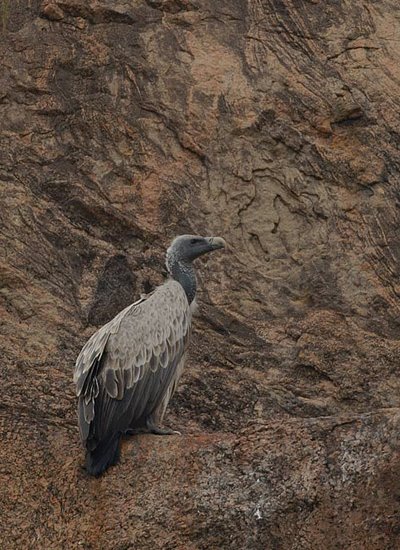
Indian Long-billed vultures in Orcha, Madhya Pradesh (Image Credit: Yann Forget / Wikimedia Commons)

Despite conservation efforts, the population of the critically endangered, Long-billed vultures is declining in India. According to Ministry of Environment, Forests and Climate Change, there are only 12000 Long-billed vultures left in India as per the latest survey figures.

Answering a query in the Lok Sabha, the Ministry informed that surveys in the past showed that the population of the vultures in the country was establishing after a sharp decline during the mid-90s till 2007. However, the latest surveys show that the Long-billed vulture population is still declining.

Despite a ban, diclofenac still kills Indian vultures


Diclofenac may be banned on papers to keep the falling population of vultures in India, but it is still killing the scavenger birds, reveals the death of two vultures at the Indian Institute of Management Ahmadabad (IIMA) last week. Wildlife enthusiasts claim that the vultures died of poisoning from the veterinary drug diclofenac.

White rumped Vulture, Gyps bengalensis, diclofenac poisoning, vulture death, Indian vulture deaths
White rumped Vulture (Gyps bengalensis)
Photo courtesy: Wikimedia Commons
According to sources, two dead White rumped Vultures from the IIMA campus were handed over to Jivdaya Charitable Trust, a veterinary trust working to save injured birds and animals, in Ahmadabad on August 16 and 21. The sources with the trust said that both the birds died of visceral gout – a condition caused by diclofenac poisoning.

 According to studies, the veterinary drugs containing diclofenac, used for treatment of cattle, stays with the carcass causing visceral gout in vultures, when they feed on the dead animals. Diclofenac poisoning has drastically brought down the vulture population in India, pushing them to the brink of extinction. White rumped Vulture (Gyps bengalensis) is included in the critically endangered category by the International Union for Conservation of Nature (IUCN) for their drastic fall in the population.

The incident has brought down the vulture population in Ahmadabad. Latest vulture population data in an around Ahmadabad shows that the city may have anything between 20 to 50 vultures. Majority of them, around 20, were at the IIMA campus. With the present incident, the vulture population at IIMA campus has come down to 18. However, it is estimated that the city outskirts may be sheltering about 200 vultures.

Diclofenac substitute campaigns
According to conservation enthusiasts, the use of diclofenac is still rampant in Ahmadabad and other parts of Gujarat. Despite a campaign to replace diclofenac with an alternative drug Meloxicam, which does not cause poisoning to vultures, the killer drug is still around, says an activist.


A recent study on threat to vulture population in India found that a variant of diclofenac named Aceclofenac is used as a veterinary medicine in India which may still be contributing to the decline of vulture population in India.

Critically Endangered Indian vultures face threat from new veterinary painkiller Aceclofenac


Diclofenac, the widely used veterinary painkiller was a killer of vultures too, which has forced the Indian government to ban the usage of it as a painkiller on animals. But a recent research review shows that the pharmaceutical companies have introduced a new alternative named Aceclofenac, which is again fatal to the vultures in the country. 

White-rumped Vulture, Gyps bengalensis
White-rumped Vulture (Gyps bengalensis)
Image Courtesy: Wikimedia Commons
The review published in the Journal of Raptor Research, points out that the new entrant has a structural and pharmaceutical similarity to the banned chemical. As per the empirical studies cited by the paper, Aceclofenac turns into the same lethal Diclofenac after metabolised inside the cattle body. 

According to the review, the non-steroidal drug which is used to suppress inflammations in animals is again toxic to the Gyps genus of birds which includes three major vulture species - Gyps bengalensis, G. indicus and G. Tenuirostris - found in South Asian countries. All the three are listed as Critically Endangered vultures by IUCN. The paper argues that the banned chemical and the alternative have at least two same metabolites in mammals, indicating that the use of the alternative chemical on cattle may harm the vultures in the region. 

Indian Vulture, Gyps indicus
Indian Vulture (Gyps indicus)
Image Courtesy: Wikimedia Commons
Earlier studies have shown that the use of Diclofenac as a painkiller on cattle has brought down the vulture population in India as the chemical caused liver toxicity and renal toxicity to the vultures that ate the cattle carcasses. 

Safety testing and precautionary ban


The paper also calls for an urgent move to implement a regulation which makes it compulsory to subject all veterinary drugs to safety testing before they are administered on animals. It also calls for a precautionary ban on the use of the chemical till safety test on vultures are done and the metabolism of Aceclofenac on cattle is studied in detail. 

Being scavengers, the well being of vultures is a crucial factor in the survival of the food chains in a forest ecosystem. To save the vultures, the country has declared Ramadevarabetta near Bangalore in Karnataka as the first vulture sanctuary in India and is taking serious measures to conserve these critically endangered birds in the country.